
I originally wrote this blog a decade ago, 5/30/2016, right after my undergraduate degree and into my graduate degree. I was just peaking on the Dunning-Kruger curve (as in I didn’t know how much I didn’t know == way too confident), so the voice in the original piece reads very arrogant but I think there’s something to the long-term futurism sentiment that was prescient, before Elon’s Neuralink and NASA’s Artemis program.
/begin
I was classically trained as an engineer; at my core, a critical thinker and problem solver. The first step to solving a problem is to clearly and succinctly articulate the problem.
Who is involved: Humans.
What is the problem: We die.
When will it happen: Unknown but definitely.
Where will it happen: Unknown but eventually everywhere.
Why it’s a problem: It is ingrained in our genetic code to propagate or survive.
Now, my solutions are idealistic and narrow in scope, so I do apologize if you don’t feel included. These solutions say nothing about quality of life, only survival, and I bet you make the world a better place, probably more so if you aren’t included in the efforts below.
To solve the problem of extinction, we must reach one of the following end games.
Becoming Immortal
When I speak of immortality, I suggest only in a physical sense. Atoms placed next to each other, forming you, but sustaining this configuration for an infinite amount of time with no sign of wear and tear. In the 16th century, Spanish explorer Juan Ponce de León set out to find the Fountain of Youth. Shiseido, Olay, Estee Lauder, almost every cosmetic brand is advertising an age-defying cream. The National Institute of Health receives funding from Congress and invests 32.3 billion dollars [in 2016] into research grants trying “to seek fundamental knowledge about the nature and behavior of living systems and the application of that knowledge to enhance health, lengthen life, and reduce illness and disability”, or you mean in three words, to seek immortality.
Immortality is on our minds constantly, from stories and advertisements to our tax reports. Although it is elusive right now, let’s assume we’ve achieved immortality. How does this solve our problem of extinction?
I intentionally described this solution first because it is the most direct solution. We don’t go extinct because we don’t die. Here are some ideal consequences for when we’ve built that body with no expiration date: we do not feel the need to reproduce unless someone has died from unnatural causes. We do not need to fight for resources because there isn’t competition at a survival level anymore. Longer lives decrease the total amount of knowledge debt associated with a large group of students, instead focusing on training a few students intensely.
Devil’s advocate: the world isn’t ideal. Kurt Vonnegut wrote a short story titled “2 B R 0 2 B” speaking of a dystopian, overcrowded world full of grumpy immortals. Winne learned in “Tuck Everlasting” that death is an escape from the dread of immortality. There is controversy as to whether you would want to be immortal. To be fair, I didn’t want to talk about whether humans want to be immortal or not, but that it is a solution we are compelled to pursue.
Uploading Yourself to a Matrix
A clever way of cheating physical death is to escape into a different form of living. I propose a virtual image of yourself in a matrix, in which your entire essence is completely defined by symbols in a script that can act and react as if you had in real life for an indefinite amount of time. If done correctly, this computer model of your world and yourself will be able to predict every event in the future with certainty. This includes modelling a physically accurate environment, your image interacting with the environment in a perceived physical way, and then learning and adapting as you would in a physical world. I want to stress that you and your image would not be able to tell the difference between who was in the matrix and who was physical.
Ideally, as long as you can power the computer, you could live forever in this little box with all your friends and family. You could add a line of code that executes “stop aging” or more like “don’t change how I physically interact with my perceived space and time”.
Devil’s advocate: But I don’t feel comfortable with the idea that I’m not real, like, physically real. It doesn’t make me feel good that I’m predestined to this life because of my personality and environment. I think the questions are: what is it to be human? Must you have a body? Must you be a unique snowflake that has free will? There are plenty of philosophers who argue both sides of the problem of consciousness. To only name one from each side: Descartes said “I think therefore I am”, and to butcher such an elegant statement, your entire interaction with your perceived world is an internal sensation. You have no possible way of discerning you’re not already in a matrix or in the real world, much less knowing how long you’ve been around or implanted with memories. Aquinas asserts physical sensations as the incitation to internal stimulation, that you can’t have yourself unless you have environmental inputs to form you. Imagine you exist: you have your senses and wit about you, but you’re floating in a senseless tank of grey free space, having never sensed anything before. You’re trapped in a state of nothingness until some external stimuli activate you.
I’m going to bypass those arguments. I know I have external stimuli, and I personally interact with it. Assuming this of everyone, I could replicate both the external stimulus and the personal interactions with lines of code, as lines of code approach infinity. Pretty theoretical, I know, but as mathematicians say in one of my favorite jokes: “a solution exists” and walk away.
Utilizing Energy with Complete Efficiency
Although this concept is not old, I like the way Kardashev classifies societies by “measuring … technological advancement, based on the amount of energy a civilization can utilize directed towards communication. The scale has three designated categories called Type I, II, and III. A Type I civilization – also called planetary civilization – can utilize and store energy available from its neighboring star which reaches its planet…” You may read more by googling the Kardashev scale. To be simply put: renewable and alternative energy as we currently call it. We’re not yet at a Type I, and there is speculation that there is no Type III in our local group, else we would know by now and probably face extinction or slavery from our alien overlords.
Assuming entropy isn’t a big deal and our sun lasts forever, if we, as a species, could utilize the resources of our planet and sun to 100% efficiency (I guess defeating the entropy beast), we could live on this rock forever. This solution is different in the way that not one human is going to survive forever, unless you already have immortality or a matrix; instead, this solution focuses on the survival of a group forever. Many could die and be reborn every second as long as some human occupies this rock forever.
Devil’s advocate: Yeah, far-fetched. You lost me at disobeys the second law of thermodynamics. Yeah, I kind of lost me too, but the small squeak at the end of the law states “entropy … remain the same”. We need to really turn this squeak into a roar to be plausible.
So the solution exists with some HUGE if’s. You would need everything in the entire universe to remain at the same level of entropy. It doesn’t matter if your system of Earth and Sun is a closed system, entropicly stable; the entire universe, which is expanding, has to just… stop. Stop spreading star systems apart, stop ripping atoms apart, stop producing heat, STOP! Not going to happen, but “a solution exists”. *drops mic*
Becoming a Universal Community
My personal favorite: space exploration and expansion. The next step in our evolution is to establish ourselves on another planet. Then the solar system, galaxy, cluster, local group, etc. These steps belong alongside the unicellular to multicellular transition and fish to land transition. We would propagate ourselves through the universe, utilizing resources from anywhere and everywhere, surviving with a nearly infinite bounty.
Devil’s advocate: But you can’t travel past the speed of light, so some resources are physically not possible to reach. You only exist as long as the universe still exists. OK, no one right now has an answer to warp travel, but are you sure we’ll never figure it out? Heat death is good and all, but that is true of all of the above solutions.
This doesn’t have a closed-form solution like the others do. What I like about this solution is that it is the most feasible (from an unbiased aerospace engineer’s perspective) and buys us time to figure the other stuff out. Space exploration is a journey of understanding, and I would argue that solutions to questions not yet posed are out there waiting for us, as many indirect technologies have come from our space technology development. We don’t fully understand the physics of our universe, and exploring space helps with that knowledge gap in a way that staying on Earth cannot. That fundamental knowledge of the universe offers breakthroughs for the other solutions mentioned above.
/end
Updates in Technology
Since I wrote this piece in 2016:
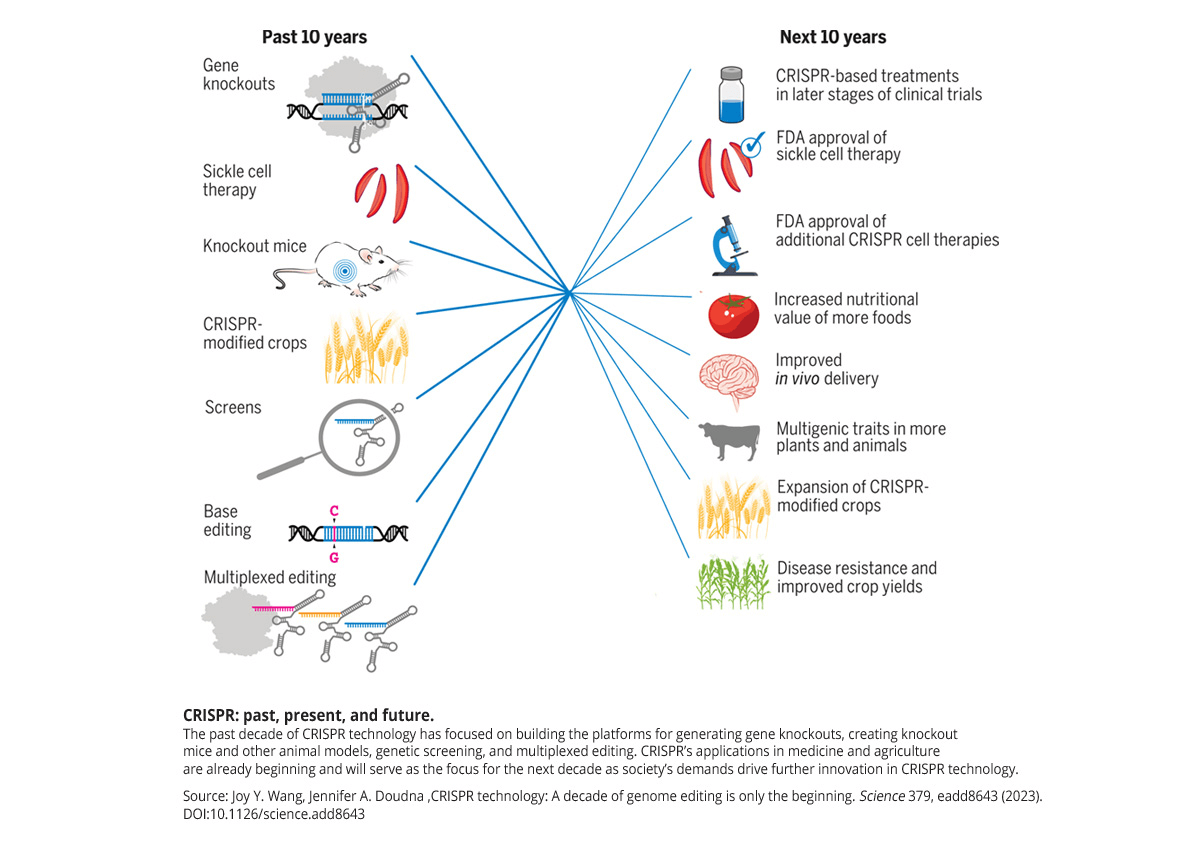
Regarding biological immortality, CRISPR won the Nobel prize in 2020, allowing us to edit our genes. We have the potential to cure so many diseases, and maybe even prevent some.
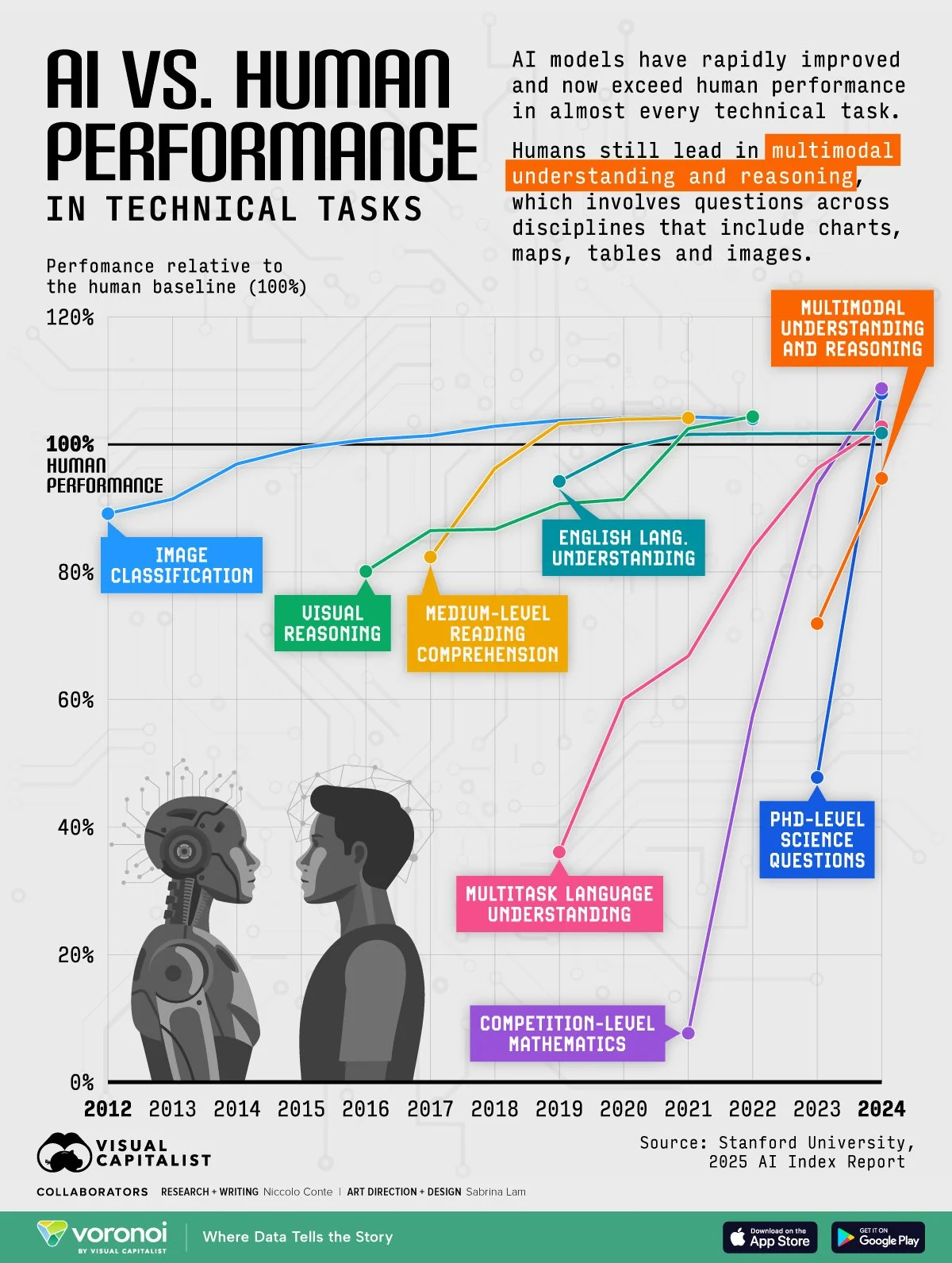
Regarding digital immortality, AI (artificial intelligence) is already performing at superhuman levels in many different tasks. As of the publication of this blog, AGI (artificial general intelligence) is predicted to arrive June 30, 2029 with confidence: 76% within 2σ [expert consensus gathered by AGI Countdown Clock]. Supervised learning models trained with our data and reinforced with our feedback, currently how these LLMS (large language models) work, reflect our information and sentiments as a community. I would argue this is one way of preserving our humanity digitally but others argue that AGI will be like our child, divergent from our essence and humanity.
Regarding entropic immortality, just recently did renewable energy sources outpace coal energy production. Solar energy seems to be at an inflection point in which solar energy is the economical choice in many cases.

Regarding spacefaring propagation, the Artemis program started in 2017 to establish a persistent human presence on another celestial body. Jared Isaacman, the newly appointed NASA chief administrator, just announced in 2026 a renewed initiative to establish a Lunar base in a race against China, who have successfully landed rovers on the Moon and returned samples from the far side of the Moon.
Reflection
All this technology and the world is on fire. We’ve certainly made enormous strides in proposing solutions to our extinction but we feel closer than ever to bringing about our own extinction: geopolitical tension with the threat of nuclear warheads, climate change (wildfires threatening to cancel my wedding), maligned artificial intelligence escaping the boundaries of our control, birth rate below replacement levels, social media drive us to illness and suicide, and the list goes on in existential threat to our survival.
Technology may be the solution to our survival but it doesn’t seem to make our time here more joyful, more fulfilling. We need folks to make our time here feel worthwhile. Ironically, AI has made me appreciate humans more. I can see more clearly what humans add to my life that technology cannot.